IPL PhotoFacial San Marcos
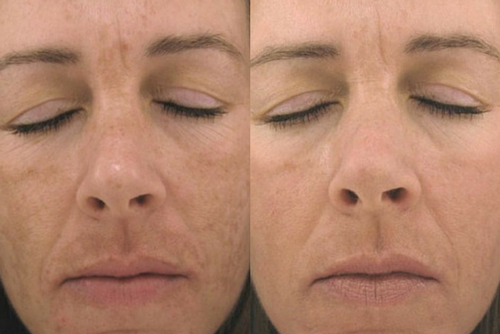
A photofacial treatment, is a procedure in which intense pulses of light are used to penetrate deep into the skin. IPL photorejuvenation then causes collagen and blood vessels below the epidermis to constrict, reducing redness and age lines. The procedure involves only minimal discomfort, while the redness and swelling that sometimes occur after treatment disappear shortly. Most benefits of a photofacial occur gradually in the weeks following treatment. When performed on the right person, it effectively improves skin texture, eliminating discolorations, reducing pore size, and minimizing wrinkles and fine lines. If you have rosacea, a condition that causes blotchy redness in the face, you may also benefit from an IPL photofacial.
VENUS VERSA™ IPL PHOTOFACIAL TREATMENT
FIGHT SUN DAMAGE WITH THE POWER OF LIGHT WITH VENUS VERSA™ IPL TREATMENTS!
As San Diegans, its so easy to be accustomed to spending small blocks of time in the sun that it is all-too-easy to forget the damage that those warm rays are doing deep within the tissues of the skin. Unfortunately, many of the changes that we notice on our face are actually caused by sun damage triggered by either natural ultraviolet (UV) rays from the sun or artificial UV rays from tanning beds/booths, also known as “photoaging”. Sun damage comes in many forms, including:
- Irregular pigmentation problems on the hands, arms, face, chest, and shoulders
- Sun spots, liver spots, age spots, and brown spots
- Melasma (patches of darkened skin)
- Rough, uneven skin tone and texture
- Spider veins, broken or dilated capillaries, and/or rosacea
- Fine lines and wrinkles
- Enlarged pores
All of these elements are treatable with the Venus Versa™ IPL Facials, which can be used on the Face, Decollate, Arms, Hands, and other body parts.
BENEFITS OF IPL TREATMENT WITH VENUS VERSA™
Venus Versa™ is a powerful, highly effective Intense Pulsed Light (IPL) skin treatment that harnesses the power of light to reverse these effects of sun damage, as well as the natural aging process. While it may seem counter-intuitive (won’t adding more light to your skin increase the damage instead of fix it?), IPL treatments utilize safe infrared light (as opposed to UV light) to improve and enhance the color, tone, texture, and condition of your skin by stimulating the production of collagen and elastin deep within the tissues of the skin. Other benefits of IPL with Venus Versa™ include:
- Non-invasive and non-ablative
- One treatment can be completed in less than 20 minutes
- No downtime or recovery time: return to your normal activities immediately
- Built-in cooling system to ensure your comfort during treatment
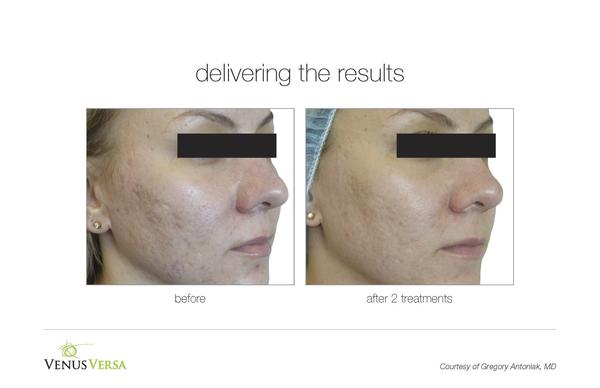
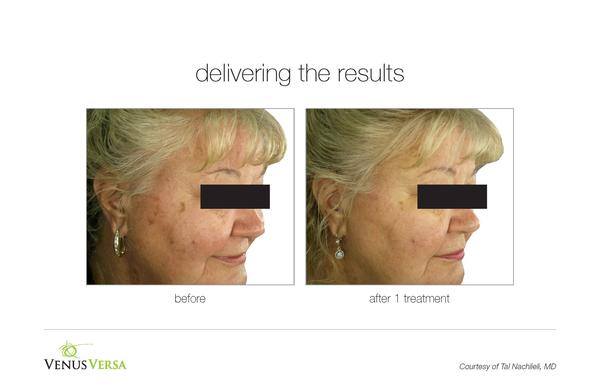
- Powerfully reduces minor pigmentation problems like brown spots with just 1 or 2 treatments
- Safe and effective
- Works for all skin types.
CAN TANNED OR ETHNIC SKIN BE TREATED WITH A VENUS VERSA™ IPL TREATMENT?
An active tan from the sun or tanning beds is not appropriate for treating with IPL. Tanned skin has a lot of pigment or melanin, which may also absorb the IPL light energy. It is recommended that a person not have sun exposure or have used a tanning bed in the area to be treated for a period of 3-4 weeks prior to treatment with IPL. Self-tanners must be faded from the skin for at least 14 days prior to treatment. Discuss with your clinician the possibility of tanning during your series so that a safe regimen can be created. Ethnic skin is NOT a candidate for Photofacial treatments or other IPL therapies generally speaking. Be wary of any place that will perform IPL on dark ethnic skin, because you are always at risk for permanent scarring and increased hyperpigmentation, even if you have had successful treatments in the past. It’s not worth the risk when there are safe and effective ways to lighten and rejuvenate ethnic skin.How does IPL Photorejuvination work?
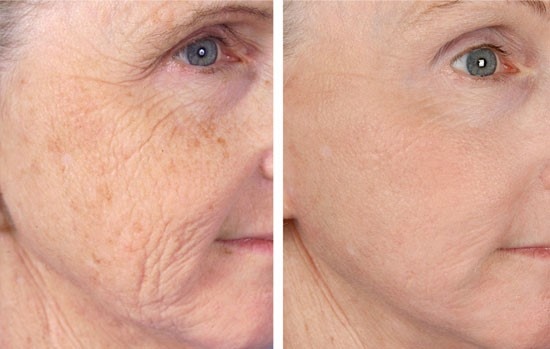
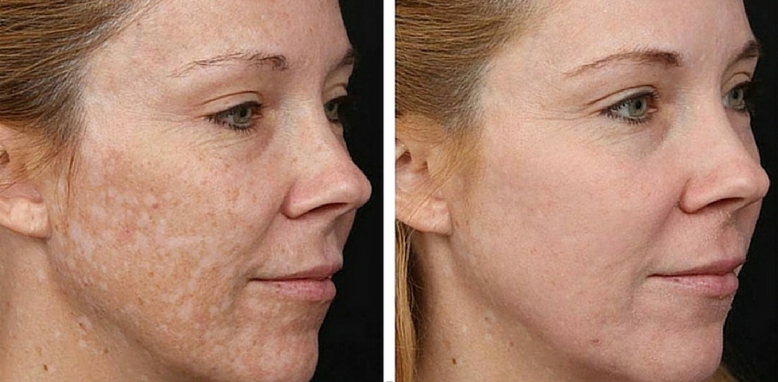
During an IPL photorejuvenation treatment, high energy light waves are used to reduce or eliminate many common effects of aging, including facial wrinkles and skin discolorations. IPL light also encourages the production of collagen, a natural protein that fills in wrinkles, making the skin smooth and supple. With each treatment, the results of IPL photorejuvenation become more pronounced. Six full-face IPL photofaciall sessions spaced four weeks apart are normally required for optimal results.
HOW VENUS VERSA™ WORKS
The state-of-the-art Intense Pulsed Light treatment delivered by Venus Versa™ is designed to deliver strong and precise infrared light throughout the sensitive tissues of the skin. Each treatment is custom-tailored to deliver the light at various depths in order to treat your specific concerns at their source. The light restores and rejuvenates dead and damaged skin cells at the molecular level, stimulating the production of new collagen and elastin, reducing wrinkles and pigmentation projects, and improving your skin’s overall tone and texture. Venus Versa™’s revolutionary, built-in cooling system ensures that it delivers safe, comfortable, highly effective rejuvenation over larger areas of the skin, while avoiding unnecessary damage to the surface of the skin.
A typical IPL session with Venus Versa™ usually takes about 15-20 minutes, and because the treatment is non-invasive and non-ablative, you can return to your normal activities immediately with no downtime! Some patients will experience temporary facial redness which may last up to an hour after the treatment. You will see some reduction in pigmentation problems immediately after your first treatment, and for individuals with brown spots and other minor pigmentation problems, one or two treatments may be all that is required. Most patients, however, require a series of 3-6 treatments, spaced about four weeks apart, for optimal results.
PREPARING FOR VENUS VERSA™ IPL PHOTOFACIAL TREATMENTS
Before beginning a Venus Versa™ IPL treatment we will do a complimentary consultation to see if your skin type, facial cosmetic concerns, expectations and goals are a match for our IPL laser treatments. The Treatment Professional will work with you to select the best treatment or combination of treatments for your skin type, facial cosmetic concerns, expectations and aesthetic goals. The estimated duration and cost of each session or series of sessions will also be provided to you. If you are a candidate, you may schedule your treatments and test spots at the time of this initial consultation.
WILL THE IPL PHOTOFACIAL BE UNCOMFORTABLE?
The procedure is gentle, noninvasive and safe, some individuals are more sensitive than others and with more sun damage you will feel more heat. Venus Versa IPLS has a built in cooling system so most individuals feel that this procedure is more comfortable than other lasers they have experienced. During the IPL photofacial procedure, you will feel a warm sensation caused by the handpiece. Some patients liken the sensation to a light “snap” from a rubber band. The number of pulses you receive will depend on the size of the area being treated, as IPL photofacial treatment causes very little pain.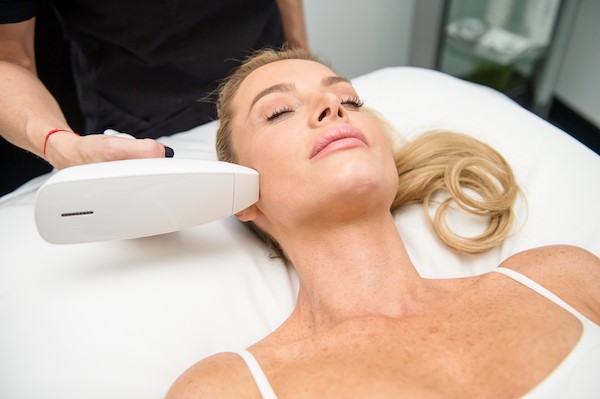
WHAT TO EXPECT DURING A VENUS VERSA™ IPL TREATMENT
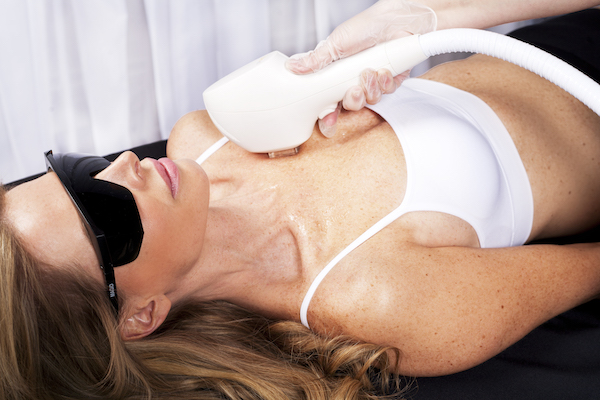
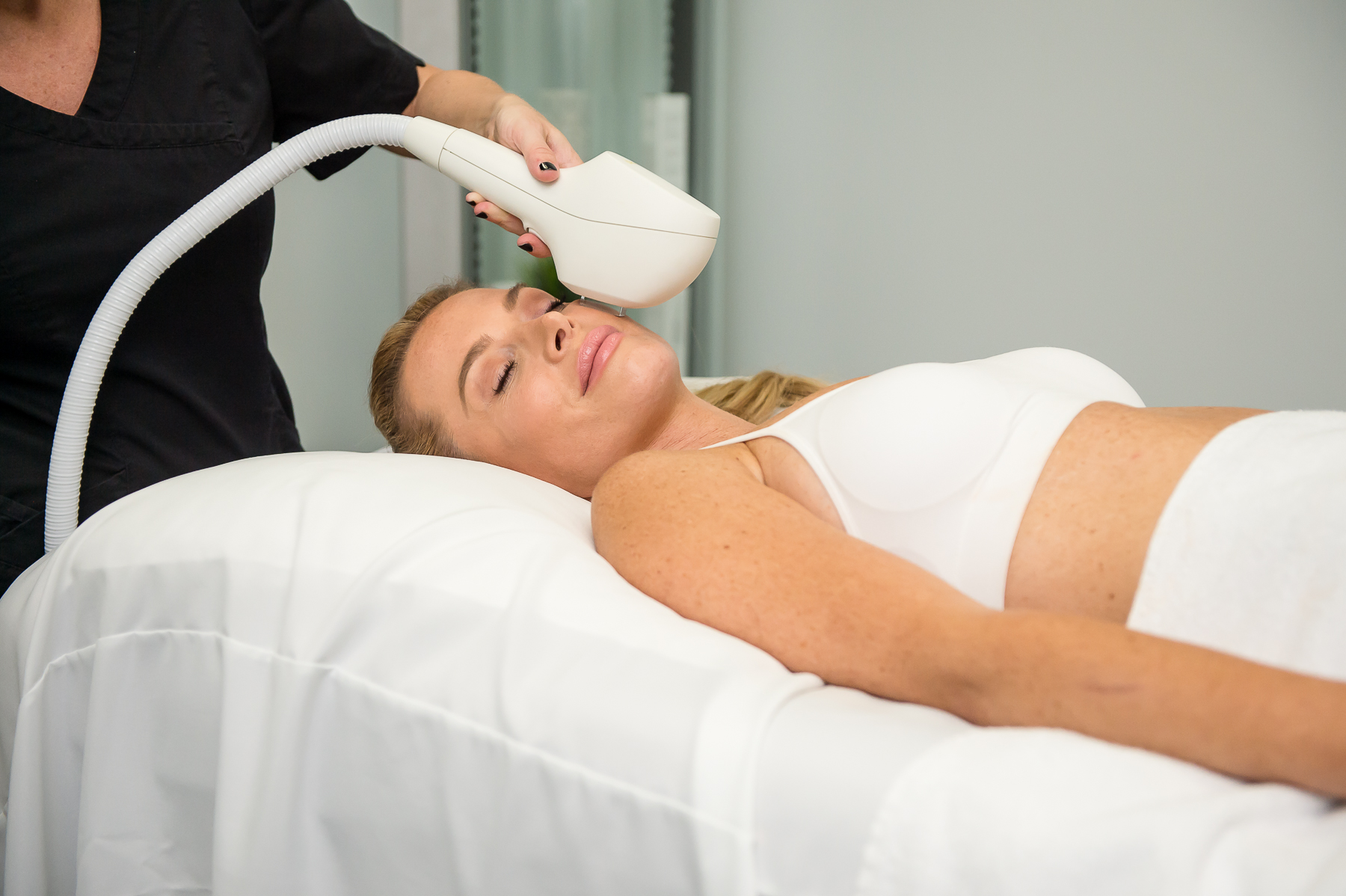
Before the procedure begins, you will be given protective eyewear to protect you from the bright flashes of light. A cool gel is often applied to the treatment area, both to lubricate the handpiece and to help cool the epidermis during the treatment. Your skin care specialist will apply brief pulses of bright light to the skin through the handpiece. Depending on the size of the area being treated, the procedure may take anywhere from a few minutes to an hour. During the IPL photofacial procedure, you will feel a warm sensation caused by the handpiece. Some patients liken the sensation to a light “snap” from a rubber band. The number of pulses you receive will depend on the size of the area being treated, as IPL photofacial treatment causes very little painHOW MANY IPL TREATMENTS WILL I NEED?
The number of treatments needed varies from patient to patient, somewhere between 3-10 treatments is required depending on if your goals are cosmetic, therapeutic or both. Your clinician will personalize a treatment plan based on your skin defects and the level of improvement you desire. Your clinician may also combine your treatment with other popular aesthetic procedures to further enhance the outcome. While you will see some improvements in pigmentation from one treatment generally more are required to get an even smooth look especially on the body areas. Touch ups to remove any residual striping that may occur can be performed at the 30 day mark.
IPL photofacial after care
- Use of scented lotions or soaps, exfoliant creams (Retin-A, glycolic / salicylicandalpha-hydroxyacids), acne creams or gels, loofa sponges and aggressive scrubbing
- Hot or cold water – wash with tepid water
- Shaving
- Swimming pools and spas with multiple chemicals /chlorine
- Activities that cause excessive perspiration
- A cold compress or an ice pack can be used to provide comfort if the treated area is especially warm. This is typically only needed within the first 12 hours after the treatment.
- Skin may be appear red, swollen and blotchy and have a mild sunburn sensation. This is a normal reaction. It can last from a few hours to days after treatment. Applying an ice pack for the first 24 hours will help minimize swelling.
- Vitamin E or Aloe Vera applied to the treatment area may provide a soothing effect. Post treatment discomfort is typically minimal but if the area is very uncomfortable, oral pain relievers; i.e. Extra Strength Tylenol or Advil, may be used.
- Freckles and sunspots may turn slightly darker initially and then flake off within 7-14 days. This is a desired and normal reaction.
- There may be erythema (redness) and slight edema (swelling) and temporary marks from the crystal. Makeup may be applied immediately after the treatment as long as skin isn’t blistered. In the unusual case of crusting of the skin in the treated area, apply an antibiotic ointment twice a day to the affected areas. Do not pick at these areas, as this may result in infection or scarring.
- If the skin is broken or a blister appears, apply an antibiotic ointment and contact the office immediately. Keep the affected area moist and avoid direct sunlight.
- Strictly avoid any sun exposure to the treated area for a minimum of 7 days after the procedure. The treated area is more prone to sunburn and pigmentation change. Keep the area covered and use a sun block with a protection factor of 30+, and reapply every 2 hours. Delayed blistering secondary to sun exposure has been noted up to 72 hours post treatment.
- If in the middle of a series of PhotoTherapy treatments, sun exposure should be avoided between treatments and a sunblock should be Subsequent treatments are based upon your clinician’s recommendation and are typically 2-4 weeks apart.
AFTER RECEIVING VENUS VERSA™ IPL TREATMENTS
The recovery time from an IPL skin procedure is often very short, as there is very little damage done to the skin during treatment. Depending on the skin condition you are seeking to remedy as well as your skin type, the redness that is present following the procedure may persist for a longer or shorter period of time. The side effects of IPLphotofacial treatment dissipate within a few hours for many patients. For some patients, however, the redness or dark spots may take a week to fade. Patients treated for severe acne sometimes experience longer recovery times, though they are often amazed by the results when the side effects wear off. The most important things to remember following IPL photofacial treatment are to avoid the sun for several days and to wear plenty of sunblock for at least two weeks. Intense pulsed light therapy can give you excellent results for a year or more, but you must take care to ensure your skin is protected for the first few weeks after treatment. Following Versa IPL treatments, there may be a minor degree of redness and puffiness to the skin, with some tingling discomfort that usually disappears within 1 hour to 2 days. You may apply makeup immediately and return to your regular daily activities with no “downtime”. A comprehensive Skin care program will be recommended for you to use in conjunction with your Versa IPL treatments. It is highly recommended you discuss a maintenance program and begin a home skin care program to prevent potential complications, optimize and maintain the cosmetic improvements you obtain with your Versa IPL treatments.VENUS VERSA™IPL PHOTOFACIAL RECOVERY TIME
The recovery time from an IPL skin procedure is often very short, as there is very little damage done to the skin during treatment. Depending on the skin condition you are seeking to remedy as well as your skin type, the redness that is present following the procedure may persist for a longer or shorter period of time. The side effects of IPL photofacial treatment dissipate within a few hours for many patients. For some patients, however, the redness or dark spots may take a week to fade. Patients treated for severe acne sometimes experience longer recovery times, though they are often amazed by the results when the side effects wear off. Body areas tend to have more down time, redness, heat, brick marks and generally take longer to heal than the face or neck. They can have more discoloration during the healing process that can require a longer period of time to heal and may require a touch up for stripes or a microdermabrasion to smooth the treatment. The more sun damage you have the more likely you will need some aftercare measures to give an even smooth skin tone. The most important things to remember following IPL photofacial treatment are to avoid the sun for several days and to wear plenty of sunblock for at least two weeks. Intense pulsed light therapy can give you excellent results for a year or more, but you must take care to ensure your skin is protected for the first few weeks after treatment.